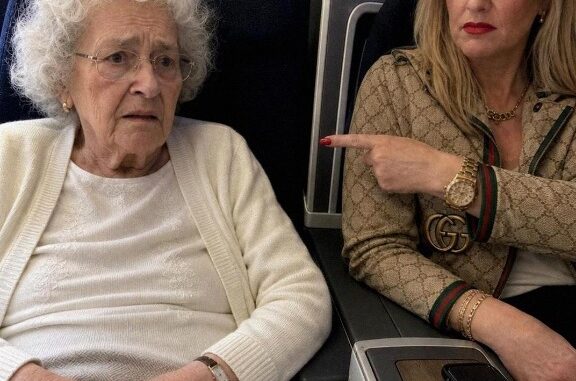
My grandmother, Eleanor, spent most of her life caring for other people. She raised four children on her own after my grandfather passed away unexpectedly when the youngest was still in elementary school. She worked long shifts at a local diner during the day, took sewing jobs in the evenings, and somehow still managed to keep her home warm, welcoming, and full of love.
To everyone who knew her, she was the kind of woman who always seemed capable of handling anything.
When I was a child, I spent countless afternoons at her little house. The scent of cinnamon and fresh bread always drifted through the kitchen. Soft music played from the radio while sunlight poured through the curtains. Grandma would place sliced apples or homemade cookies on the table and let me sit nearby while she cooked dinner.
I remember watching her hands more than anything else.
They moved with confidence and grace. Those hands stitched torn clothes, braided hair, planted flowers, wrote beautiful letters in careful cursive, and baked birthday cakes that looked like they belonged in bakery windows. Every Sunday morning, she kneaded dough for bread from scratch, even well into her seventies.
As a child, I believed there was nothing those hands could not do.
That is why it hurt so deeply when Parkinson’s disease slowly began taking pieces of her independence away.
At first, the changes were small. A slight tremor when she poured tea. A pause before buttoning her sweater. A little frustration when signing her name. But over the years, the disease became harder to ignore.
Grandma tried to laugh it off whenever anyone mentioned it.
“Oh, these silly hands,” she would say with a smile.
But I could see how much it affected her.
The woman who once decorated wedding cakes with delicate frosting flowers now struggled to hold a spoon without spilling soup. The person who had written long handwritten letters to every family member every holiday stopped writing altogether because her hands shook too much.
Even so, she remained gentle and kind.
She never complained.
When she turned eighty-five in March, our family gathered for a small birthday dinner. There was chocolate cake, candles, and old photo albums spread across the table. During dessert, my mother asked her if there was anything special she wanted that year.
Grandma thought quietly for a moment.
Then she smiled.
“I want to meet Noah,” she said softly. “Before I’m too old to hold him.”
She was talking about my cousin Gina’s baby boy, who had been born earlier that year in California.
Because of health concerns and travel expenses, Grandma had not been able to visit after the birth. She had only seen pictures and short video calls.
But every time Noah appeared on a phone screen, her entire face lit up.
My mother and I exchanged a look across the table.
We knew we had to make this trip happen.
For months, we quietly saved money whenever we could. We skipped eating out, picked up extra work, and cut back on unnecessary expenses. Traveling across the country was expensive, especially with Grandma needing additional support.
Eventually, we managed to purchase plane tickets.
Not just regular tickets.
Business class tickets.
We did not tell Grandma immediately because we wanted it to be a surprise.
She had spent her entire life sacrificing comfort for other people. She always chose the cheapest option, even when she deserved better.
We knew the extra space, easier boarding process, and quieter environment would help make the journey less stressful for her.
Mostly, though, we simply wanted her to feel cared for.
When we finally told her a week before the flight, she looked completely shocked.
“Business class?” she repeated.
“Yes,” my mother said with a grin.
Grandma immediately protested.
“Oh no, that’s too much money. You shouldn’t spend that on me.”
“You spent your whole life taking care of everyone else,” I told her. “Please let us do this for you.”
She became emotional after that.
The night before the flight, she barely slept.
I woke up early the next morning and walked downstairs to find her already dressed. She wore a lavender sweater, pearl earrings, and neatly pressed slacks. Her silver hair was carefully styled.
“Grandma,” I laughed, “we still have hours before we leave.”
“I know,” she replied nervously. “I just didn’t want to be late.”
Then she looked at me with uncertainty.
“Do I look all right?”
“You look beautiful.”
She smiled, though I noticed she asked the same question several more times before we reached the airport.
I understood why.
Parkinson’s had made her self-conscious in ways she had never been before.
At the airport, she clutched her purse tightly while we made our way through security. She apologized repeatedly whenever her shaking hands slowed things down.
“No need to apologize,” I reminded her.
She nodded, though I could tell she still worried about being a burden.
Once we boarded the plane, I helped her settle into her seat in business class.
She looked around with quiet amazement.
Her fingers brushed over the folded blanket.
“This feels fancy,” she whispered.
I smiled.
“They gave me real silverware,” she added, sounding genuinely surprised.
I laughed softly and kissed her cheek.
“I’ll come check on you after takeoff.”
Because I was seated farther back in economy, I stopped near the front galley before returning to my seat.
A flight attendant stood nearby preparing drinks.
“Excuse me,” I said quietly. “My grandmother is sitting in 2C. She has Parkinson’s disease. She’s completely okay, but sometimes she has trouble opening things or holding cups steadily. I just didn’t want her to feel embarrassed asking for help.”
The flight attendant immediately looked understanding.
“Thank you for letting me know,” she said kindly. “Don’t worry. I’ll keep an eye out and make sure she’s comfortable.”
Relieved, I headed back to my seat.
For the first part of the flight, everything seemed fine.
Whenever I glanced toward the front cabin, Grandma appeared fascinated by every little detail. She carefully unfolded her napkin like it was something precious. She looked out the window with the excitement of a child.
Seeing her happy made the months of saving money completely worth it.
Then, about twenty minutes after takeoff, the mood changed instantly.
A sharp voice suddenly cut through the cabin.
“Excuse me. I need you to move her.”
I looked up immediately.
A woman sitting beside Grandma had stood up.
She appeared wealthy and polished, dressed in expensive designer clothing and wearing heavy perfume that had drifted several rows back earlier during boarding.
The flight attendant approached calmly.
“I’m sorry, ma’am?”
The woman gestured toward my grandmother.
“Her hands keep shaking, and it’s making me uncomfortable,” she said loudly. “I paid for a peaceful business class experience.”
My stomach dropped.
Grandma sat completely still beside the window.
Her face had lost all color.
Slowly, she tucked both trembling hands beneath the blanket on her lap, as if hiding them could somehow make the situation disappear.
The woman continued.
“You need to move her somewhere else. Or move me.”
Several passengers nearby had started staring.
Then Grandma spoke in a tiny, fragile voice I had never heard from her before.
“I can move if I’m bothering people.”
Hearing that nearly broke my heart.
I instantly unbuckled my seatbelt and stood up, ready to walk forward.
But before I could reach her, the flight attendant responded.
She carefully set down the tray she had been carrying.
Her expression remained professional, but there was firmness in her voice now.
“Ma’am,” she said to the complaining passenger, “we cannot move someone because of a medical condition.”
The woman crossed her arms.
“Well, I shouldn’t have to sit beside this.”
The flight attendant remained calm.
“What we can address,” she continued evenly, “is behavior that disrupts or harasses other passengers.”
The woman looked stunned.
“Excuse me?”
“You are speaking disrespectfully to another passenger because of symptoms related to a neurological illness,” the attendant explained. “That behavior is inappropriate.”
The woman gave a short laugh filled with disbelief.
“So now I’m the problem?”
A man across the aisle quietly muttered, “Unbelievable.”
The woman ignored him.
“I paid for comfort,” she continued loudly. “I should not have to spend six hours watching someone shake beside me.”
At that point, the entire front cabin had gone silent.
The flight attendant pressed the call button overhead.
A second crew member arrived, followed shortly by the senior purser.
The first attendant calmly explained what had happened.
No raised voices.
No drama.
Just clear facts.
After listening carefully, the purser turned toward the passenger.
“Ma’am,” he said professionally, “harassment toward another traveler is not acceptable. We will need to reseat you for the remainder of the flight.”
The woman’s face immediately turned bright red.
“You cannot be serious.”
“I am completely serious,” he replied.
“At least move me to first class,” she snapped.
No one around her offered support.
Instead, several passengers looked openly disgusted.
“This way, please,” the purser said.
Furious, the woman grabbed her designer handbag and followed the crew toward the back of the aircraft.
Ironically, they reseated her only a few rows behind me in economy.
I thought that would finally end the situation.
But what happened next surprised me.
As soon as she sat down, another passenger nearby shook her head.
“I don’t want someone that rude sitting next to me,” the woman said.
The complaining passenger looked shocked.
A man in the next row leaned over slightly.
“You should be ashamed of how you treated that elderly woman,” he said.
Then, from farther back in the cabin, a young child loudly asked his mother, “Is that lady the bad guy?”
Several passengers answered before the mother could respond.
“Yes.”
The woman sank lower into her seat and finally stopped talking.
I quickly moved toward business class to check on Grandma.
When I reached her row, she looked devastated.
“I’m sorry,” she whispered immediately. “I didn’t mean to cause trouble.”
I crouched beside her seat and gently took her trembling hands from beneath the blanket.
“Grandma,” I said softly, “you are not trouble.”
Tears filled her eyes.
“You hear me?” I continued. “You are not a burden. You spent your whole life helping people. You deserve kindness too.”
Her lip trembled.
“I hate this disease,” she admitted quietly.
I squeezed her hands.
“I know.”
“I used to do everything so easily,” she said. “I used to decorate cakes and sew dresses and pour coffee without spilling.”
“You still do wonderful things,” I told her.
But she looked embarrassed.
“I hate when people stare.”
There was so much sadness in her voice that I struggled to hold back tears myself.
At that moment, the flight attendant gently touched my shoulder.
“You’re welcome to stay up here with your grandmother for the rest of the flight,” she said.
I blinked.
“Really?”
“Of course.”
The empty seat beside Grandma had become available after the other passenger was moved.
“Thank you,” I whispered.
Once I settled into the seat next to her, something remarkable happened.
The atmosphere in the cabin changed entirely.
Earlier, many passengers had politely avoided interacting with Grandma, likely unsure how to respond to her visible tremors.
Now, however, people seemed determined to make her feel included and respected.
A man across the aisle handed her an extra chocolate dessert from his meal tray.
“They accidentally gave me two,” he joked. “And my wife says I definitely don’t need both.”
Grandma laughed softly.
A few rows ahead, a mother traveling with her teenage son leaned over.
“My father also has Parkinson’s,” she said kindly. “Flying can be difficult. You’re doing wonderfully.”
Grandma placed her hand against her chest.
“That’s very kind of you,” she replied.
Later, the flight attendant returned with tea.
This time, the lid had already been loosened slightly so Grandma could open it more easily.
“No rush,” the attendant said gently. “Take your time.”
Grandma looked at her with such gratitude that it nearly made me cry again.
For the next few hours, we talked quietly.
We discussed Gina and baby Noah.
We reminisced about old family vacations and birthday parties.
At one point, Grandma stared out the airplane window at the clouds glowing in the afternoon sunlight.
Then she said something I will never forget.
“I almost asked them to take me home.”
I turned toward her.
“Why?”
She remained silent for several moments.
Finally, she answered.
“Because when someone looks at you with disgust,” she said quietly, “for a moment, you start seeing yourself the same way.”
Her words hit me hard.
I did not know how to respond.
So instead, I simply covered her hand with mine.
She smiled faintly.
“I’m glad you stayed with me,” she whispered.
As the flight continued, Grandma slowly relaxed.
At one point, she even dozed off briefly against the seat.
Even in sleep, her hands still trembled gently.
Watching her, I thought about everything those hands had done throughout her life.
Those hands had comforted crying children.
They had worked double shifts.
They had cooked thousands of meals.
They had held grieving friends, planted gardens, wrapped Christmas gifts, and applauded at graduations.
Those trembling hands carried a lifetime of love and hard work.
No cruel stranger could erase that.
As we began descending into California, golden evening sunlight filled the cabin.
Passengers started preparing their bags and checking their phones.
But something unusual happened after landing.
Normally, the moment the seatbelt sign turns off, everyone jumps up impatiently.
This time, nobody rushed.
Instead, people stayed seated and looked toward Grandma.
“Take your time,” someone said kindly.
“There’s no hurry,” added another passenger.
Grandma smiled shyly.
“Well, thank you very much,” she replied.
I helped her stand carefully.
As we moved slowly toward the exit, the teenage boy traveling with his mother smiled at Grandma.
Then his mother said something beautiful.
“You have lovely hands,” she told her.
Grandma immediately blinked back tears.
“Thank you,” she whispered.
When we reached the front of the aircraft, Grandma paused beside the flight attendant.
Emotion filled her eyes.
“Thank you for not treating me like a problem,” she said softly.
The attendant squeezed her hand.
“You were never the problem,” she replied.
That moment finally broke my composure.
I turned away quickly because tears had started running down my face.
By the time we entered the airport terminal, Grandma seemed lighter somehow.
Not because the disease had disappeared.
Not because the hurtful experience no longer mattered.
But because kindness had outweighed cruelty.
A stranger had tried to make her feel small.
Instead, an entire plane full of people reminded her of her dignity.
Later that evening, we arrived at Gina’s house.
The moment Grandma saw baby Noah, every ounce of exhaustion disappeared from her face.
“Oh my goodness,” she whispered.
Gina carefully placed the tiny baby into Grandma’s arms.
For a second, Grandma looked nervous.
Her hands still trembled.
But then she relaxed.
She held her great-grandson close against her chest and smiled with pure joy.
The room became completely quiet.
Everyone watched her.
Not with pity.
Not with discomfort.
With love.
Tears filled Grandma’s eyes as Noah wrapped his tiny fingers around hers.
“Hello there,” she whispered softly.
In that moment, I realized something important.
Strength does not disappear when a person becomes elderly or sick.
Dignity does not vanish because someone moves differently.
The world often celebrates youth, perfection, speed, and appearance.
But there is extraordinary beauty in people who continue showing up despite pain, illness, loss, and judgment.
My grandmother’s hands may shake now.
They may no longer frost cakes perfectly or write elegant letters.
But those same hands built a family.
They comforted generations.
They carried burdens most people never saw.
And finally, at eighty-five years old, those hands held her first great-grandchild.
To me, they remain the most beautiful hands in any room.
Not despite the trembling.
But because of everything they have endured, created, and loved throughout the years.
Leave a Reply