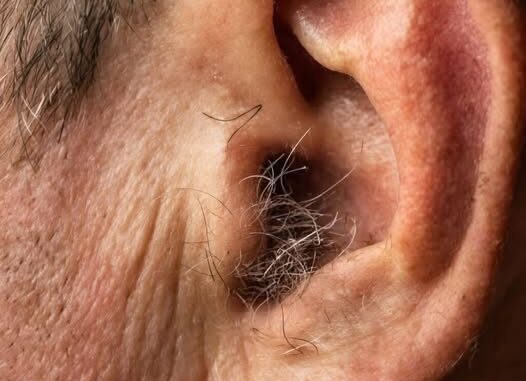
As people move through middle age and beyond, they often notice physical changes that were never present in their younger years. Some changes are expected, such as gray hair, wrinkles, or a slower metabolism. Others can seem surprising, including the appearance of thicker and more visible hair in unexpected places. One of the most commonly discussed examples is ear hair.
Many men first notice this change in their fifties or sixties when they catch a glimpse of longer hairs around the outer ear or near the ear canal. Women may also experience similar changes, particularly after menopause. Because modern beauty standards often emphasize youthful appearances, these new hairs can cause confusion, self-consciousness, or concern.
Fortunately, visible ear hair is usually a completely normal part of aging. It is not typically a sign of illness, poor health, or a serious hormonal disorder. Instead, it reflects the complex biological processes that continue to shape the body throughout life.
Understanding why ear hair develops can help remove unnecessary worry and replace common misconceptions with accurate information. This article explores the science behind ear hair growth, the role of hormones and genetics, common myths, grooming options, and the broader connection between aging and changes in hair patterns.
To understand why ear hair becomes more noticeable with age, it helps to first understand how hair grows.
The human body contains millions of hair follicles. These tiny structures located beneath the skin are responsible for producing hair throughout life. Hair growth occurs in cycles that include periods of active growth, transition, rest, and shedding.
Not all hair is the same. The body produces two primary types:
Vellus Hair
Vellus hair is fine, soft, and often nearly invisible. It covers much of the body and typically remains short and lightly pigmented.
Terminal Hair
Terminal hair is thicker, darker, and more noticeable. Examples include scalp hair, eyebrows, eyelashes, and facial hair.
Throughout life, certain hair follicles can change their behavior. Follicles that once produced barely visible vellus hair may begin producing terminal hair instead. This transformation explains why hair sometimes appears in new locations as people age.
Why Ear Hair Becomes More Visible Over Time
One of the main reasons ear hair becomes more noticeable is that aging affects how hair follicles respond to hormones.
Although many people associate aging with hair loss, the reality is more complicated. While some follicles become less active, others become more responsive to hormonal signals.
This means a person may experience thinning hair on the scalp while simultaneously noticing thicker hair growth in areas such as:
- The ears
- The nose
- The eyebrows
- The chin
- The upper lip
These changes are a normal consequence of biological aging rather than an indication that something is wrong.
The Role of Hormones
Hormones play a significant role in determining where and how hair grows.
Among the most influential hormones involved in hair growth are androgens. These hormones are present in both men and women, although typically at different levels.
Testosterone
Testosterone contributes to many physical characteristics, including muscle development, body hair growth, and reproductive functions.
Dihydrotestosterone (DHT)
DHT is a hormone derived from testosterone. It has a particularly strong influence on hair follicles.
Interestingly, DHT affects different follicles in different ways.
For example:
- On the scalp, DHT may contribute to hair thinning in genetically susceptible individuals.
- In the ears, nose, and facial regions, DHT can encourage stronger and thicker hair growth.
As people age, hair follicles in these areas may become increasingly sensitive to hormonal signals, resulting in more noticeable hair.
Why Men Often Notice Ear Hair First
Men generally report ear hair growth more frequently than women.
This difference is largely linked to higher levels of testosterone and DHT throughout adulthood.
Because male hair follicles are often more responsive to these hormones, men may experience:
- Increased eyebrow growth
- Nose hair growth
- Ear hair growth
- Facial hair changes
The effect is gradual and often becomes more apparent over several decades.
For many men, ear hair growth becomes visible during their fifties, sixties, or seventies, although the timing varies from person to person.
Ear Hair Changes in Women
Women are not immune to age-related hair changes.
In fact, many women notice shifts in hair patterns after menopause.
During reproductive years, estrogen influences numerous bodily functions, including hair growth patterns. As estrogen levels decline during menopause, the balance between estrogen and androgens changes.
As a result, some women may notice:
- Increased facial hair
- Thicker eyebrow hairs
- More visible nose hair
- Occasional ear hair growth
These changes are generally considered part of the natural aging process.
Genetics Matter More Than Many People Realize
Not everyone develops noticeable ear hair to the same degree.
Genetics plays a major role in determining:
- Hair density
- Hair color
- Hair thickness
- Follicle sensitivity to hormones
Some individuals inherit hair follicles that are particularly responsive to hormonal changes. Others may experience minimal changes despite reaching the same age.
This is why two people of similar age can have dramatically different patterns of hair growth.
Family history often provides clues about what changes may occur over time.
The Original Purpose of Ear Hair
While many people view ear hair purely as a cosmetic issue, it actually serves useful biological functions.
The ears are delicate structures that require protection from the environment.
Small hairs located around the ear canal can help:
- Capture dust particles
- Reduce debris entering the ear
- Provide a barrier against tiny insects
- Support overall ear hygiene
These protective hairs act as part of the body’s natural defense system.
Although modern living environments may reduce the importance of these functions, the biological mechanisms responsible for producing ear hair remain active.
In other words, the body continues performing a protective task that developed long before modern technology and indoor living became common.
Common Myths About Ear Hair
Ear hair has been surrounded by myths and misconceptions for many years.
Some claims continue to circulate despite lacking strong scientific support.
Myth 1: Ear Hair Indicates Serious Disease
One common belief suggests that ear hair is a warning sign of serious illness.
While certain medical conditions can influence hair growth patterns, ordinary age-related ear hair growth is generally not considered evidence of disease.
Most visible ear hair simply reflects normal aging and genetic factors.
Anyone concerned about sudden or unusual changes should consult a qualified healthcare professional for personalized guidance.
Myth 2: Ear Hair Means Poor Circulation
Another widespread myth claims that ear hair signals circulation problems.
There is no broad scientific consensus supporting the idea that routine ear hair growth is a reliable indicator of poor circulation.
Hair growth is influenced by many factors, including hormones, genetics, and age.
Myth 3: Trimming Makes Hair Grow Faster
This is one of the most persistent myths in personal grooming.
Many people believe cutting hair causes it to grow back thicker, darker, or faster.
In reality, trimming hair does not alter the follicle beneath the skin.
Hair growth occurs within the follicle, not at the visible portion of the hair shaft.
When hair is cut, the newly exposed edge may feel coarser, creating the illusion that it has become thicker.
However, the growth rate remains unchanged.
Safe Grooming Practices
Many people choose to manage visible ear hair for personal appearance reasons.
If grooming is desired, safety should always come first.
The ear contains delicate structures that can be easily irritated or injured.
Electric Ear Trimmers
Specialized electric trimmers are often considered one of the safest options.
These devices are designed specifically for sensitive areas and usually include protective guards.
Benefits include:
- Convenience
- Reduced risk of cuts
- Easy maintenance
- Quick results
Rounded-Tip Scissors
Small grooming scissors with rounded ends can also be used carefully.
They provide precise trimming while minimizing the risk of accidental injury.
Professional Grooming Services
Some individuals prefer professional grooming services offered by barbers or trained specialists.
Professional services can be especially helpful for those with limited mobility or vision challenges.
Grooming Methods to Approach With Caution
Certain methods may increase the risk of irritation or injury.
Aggressive Plucking
Removing ear hair by force can irritate the skin and potentially lead to discomfort.
Repeated plucking may also contribute to inflammation around the follicle.
Harsh Chemical Products
Hair removal creams designed for other body areas may not be suitable for the sensitive skin around the ear.
These products can cause irritation, redness, or discomfort.
Sharp Objects
Using pointed instruments near the ear canal can increase the risk of injury.
Safety should always take priority over cosmetic concerns.
Emotional Reactions to Age-Related Changes
The appearance of ear hair often triggers emotional reactions that extend beyond grooming.
Many people associate visible signs of aging with changing self-image.
Modern culture frequently celebrates youthful appearances while paying less attention to the natural realities of aging.
As a result, individuals may feel embarrassed by physical changes that are actually quite common.
Recognizing that ear hair is a normal biological occurrence can help reduce unnecessary anxiety.
It is important to remember that aging affects everyone differently, and visible changes do not diminish a person’s value, attractiveness, or health.
Aging and the Changing Hair Landscape
Ear hair is just one example of how hair patterns evolve throughout life.
Many other changes occur simultaneously.
People may notice:
- Gray hair
- Thinning scalp hair
- Thicker eyebrows
- Changes in beard growth
- Increased nose hair
- Altered body hair distribution
These shifts reflect the ongoing interaction between genetics, hormones, and time.
The body continuously adapts throughout life, and hair follicles respond accordingly.
The Science of Follicle Sensitivity
Researchers continue to study why some follicles become more active while others become less productive.
Current evidence suggests that follicle sensitivity is as important as hormone levels themselves.
Two individuals may have similar hormone levels but experience very different patterns of hair growth because their follicles respond differently.
This helps explain why aging does not look the same for everyone.
The unique combination of inherited traits and biological responses creates highly individual outcomes.
Should Ear Hair Ever Be a Medical Concern?
In most situations, ear hair growth is harmless.
However, any sudden or dramatic physical change deserves appropriate attention.
A healthcare provider may be able to evaluate unusual symptoms and determine whether additional assessment is needed.
Examples that may warrant professional evaluation include:
- Rapid changes in hair growth
- Significant skin irritation
- Persistent pain
- Unusual lesions or bumps
Routine age-related ear hair growth, however, is typically considered a normal variation of healthy aging.
Embracing Natural Changes
Aging is often viewed through the lens of loss—loss of youth, appearance, or physical abilities.
Yet aging also reflects survival, experience, adaptation, and resilience.
Every physical change tells part of a person’s life story.
Visible ear hair is simply one of many ways the body reveals the passage of time.
For some individuals, grooming provides comfort and confidence. Others may choose to leave these changes untouched. Both approaches are entirely personal decisions.
What matters most is understanding that such changes are common and usually harmless.
Conclusion
The appearance of ear hair in middle age and later life is a normal biological phenomenon influenced by hormones, genetics, and the natural aging process. Although it may seem surprising at first, ear hair growth is generally not a sign of disease or physical decline.
Hair follicles respond differently as the body ages, and areas such as the ears, nose, and eyebrows may become more active even while scalp hair becomes thinner. These changes are rooted in long-established biological processes that have evolved over thousands of years.
By separating facts from myths, individuals can better understand why ear hair develops and make informed decisions about grooming if they choose to do so. Rather than viewing ear hair as a flaw or medical mystery, it can be seen as one more example of the body’s remarkable ability to adapt and change throughout life.
Disclaimer: This article is intended for informational and educational purposes only and should not be considered medical advice. Individuals with concerns about unusual hair growth or other health-related symptoms should consult a qualified healthcare professional.
Leave a Reply