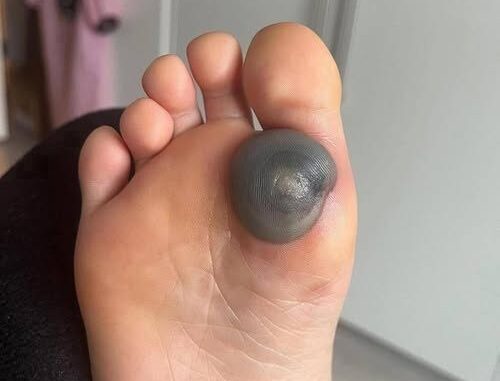
Parents often feel immediate concern when they notice an unusual mark on their child’s body, especially on the feet where injuries can easily go unnoticed during daily activity. A sudden dark-colored spot on a child’s foot can be particularly worrying. It may appear while the child is playing normally, walking comfortably one moment and then suddenly complaining of discomfort the next.
The spot might look red, deep purple, maroon, or even almost black. Because of its unexpected appearance, it can easily raise fear that something serious is happening beneath the skin. However, in many cases, these marks are not dangerous and are often linked to a common condition known as a blood blister.
A blood blister typically develops as a response to friction, pressure, or minor trauma. While the appearance may seem alarming at first, most cases are harmless and resolve with basic care and time. Understanding how and why these blisters form can help parents respond calmly and confidently.
This article provides a comprehensive overview of blood blisters on the foot in children, including causes, symptoms, healing stages, home care, prevention strategies, and warning signs that indicate the need for medical evaluation.
Why Dark Spots on a Child’s Foot Can Look Alarming
The human foot is exposed to continuous stress throughout the day. Children, in particular, are constantly active—running, jumping, playing sports, and exploring their environment. Because of this, their feet experience repeated pressure and occasional minor injuries.
When a dark mark appears suddenly on the foot, it often stands out due to its unusual coloration compared to the surrounding skin. The spot may appear in different shades, including:
- Deep red
- Purple or bluish tones
- Dark maroon
- Brownish-red discoloration
- Nearly black patches in some cases
These colors are typically the result of blood collecting beneath the surface of the skin. Since the outer layer remains intact, the trapped blood becomes visible through the skin, creating a dark appearance
Although the color change may look severe, it is often not associated with serious damage. Many of these cases are simply blood blisters that heal naturally over time.
Understanding What a Blood Blister Is
A blood blister is a small fluid-filled pocket that forms under the upper layer of the skin. Unlike common blisters that contain clear fluid, blood blisters contain blood that has leaked from damaged tiny blood vessels.
https://googleads.g.doubleclick.net/pagead/ads?gdpr=0&client=ca-pub-8681813503854240&output=html&h=280&num_ads=1&adk=3175142956&adf=1640978588&abgtt=6&w=651&fwrn=4&fwrnh=100&lmt=1781350602&rafmt=1&armr=3&sem=mc&pwprc=6356162351&ad_type=text_image&format=651×280&url=https%3A%2F%2Faliacar.net.tr%2F2026%2F06%2F10%2Fdark-spot-on-a-childs-foot-causes-blood-blisters-symptoms-and-when-to-see-a-doctor%2F&fwr=0&pra=3&rh=163&rw=650&rpe=1&resp_fmts=3&fa=27&uach=WyJXaW5kb3dzIiwiMTkuMC4wIiwieDg2IiwiIiwiMTQ4LjAuMzk2Ny45NiIsbnVsbCwwLG51bGwsIjY0IixbWyJDaHJvbWl1bSIsIjE0OC4wLjc3NzguMjE3Il0sWyJNaWNyb3NvZnQgRWRnZSIsIjE0OC4wLjM5NjcuOTYiXSxbIk5vdC9BKUJyYW5kIiwiOTkuMC4wLjAiXV0sMF0.&dt=1781350601131&bpp=1&bdt=536&idt=1&shv=r20260611&mjsv=m202606090101&ptt=9&saldr=aa&abxe=1&cookie=ID%3Df7614151007d0b5b%3AT%3D1778795374%3ART%3D1781350592%3AS%3DALNI_MaWQD_V7EmIOb4FhKc_kS9tT2ztjg&gpic=UID%3D0000138b92f205f7%3AT%3D1778795374%3ART%3D1781350592%3AS%3DALNI_ManME0B9RSn0jWbmyhgTw8dTa9klw&eo_id_str=ID%3D29a8c1a184dea42e%3AT%3D1778795374%3ART%3D1781350592%3AS%3DAA-AfjZkrsfADEbYwimZJBJ_Ivim&prev_fmts=0x0%2C1200x280%2C1005x124%2C651x280%2C651x280%2C651x280%2C651x280%2C651x280%2C651x280%2C651x280%2C651x280%2C651x280&nras=13&correlator=8574943795306&frm=20&pv=1&u_tz=120&u_his=4&u_h=800&u_w=1280&u_ah=752&u_aw=1280&u_cd=32&u_sd=1.5&dmc=8&adx=113&ady=3463&biw=1257&bih=668&scr_x=0&scr_y=1029&eid=31084128%2C95390667%2C95392168%2C95390278%2C95393281&oid=2&psts=AOrYGsnQy5Kwn60SV41jgwkDUiLfP64WHgcLJdvHkU6Fiuouk3NXxI0uxkLPkomBXZ_B4l835xfjEGuxA7tV2PVJTzVGdb2AhO4Wwdb2a-MTMubb7ltZ3TxIi8Aq0aZj0TF9EsQ%2CAOrYGsm-gdmW__qUnvtDwCoPfanagm4iy22iNYOi3Ja7aoYPIHyCdQmJJ8Kg22ymjJiqM-8FPqSrgN1p691vIDkpgNPSraPBwuL2M2YRLEbPtNF-&pvsid=6401503251045792&tmod=1745747462&uas=3&nvt=6&ref=https%3A%2F%2Faliacar.net.tr%2F%3Fs%3DDark%2BSpot%2Bon%2Ba%2BChild%25E2%2580%2599s%2BFoot%253A%2BCauses%252C%2BBlood%2BBlisters%252C%2BSymptoms%252C%2Band%2BWhen%2Bto%2BSee%2Ba%2BDoctor%26fbclid%3DIwY2xjawSaIA5leHRuA2FlbQIxMABicmlkETFNOVplMzBSUVpkZjlxNmJUc3J0YwZhcHBfaWQQMjIyMDM5MTc4ODIwMDg5MgABHohC0WCV9YuCwPaaszuWGVDlPLZSIrjgl4KK9kediuFBcl2vWKqJ5lE3rhCO_aem_3hkIcH42KAYcZrt4gL79Ww&fc=1408&brdim=0%2C0%2C0%2C0%2C1280%2C0%2C1280%2C752%2C1272%2C668&vis=1&rsz=%7C%7Cs%7C&abl=NS&fu=128&bc=31&bz=1.01&pgls=CAEaAzcuMA..&ifi=13&uci=a!d&btvi=11&fsb=1&dtd=1859
The outer skin remains unbroken, forming a protective covering over the affected area. This covering plays an important role in protecting the underlying tissue as it heals.
Blood blisters are commonly triggered by:
- Continuous rubbing or friction
- Pressure from tight or ill-fitting shoes
- Minor crushing injuries
- Repeated impact during physical activity
- Accidental bumps or knocks
Because blood is trapped beneath the skin, the blister takes on a darker tone compared to ordinary blisters.
How Blood Blisters Form Under the Skin
To understand how a blood blister develops, it is helpful to look at what happens at a microscopic level.
The skin contains a network of tiny blood vessels known as capillaries. These vessels are responsible for delivering oxygen and nutrients to the skin and surrounding tissues.
When the skin is exposed to repeated friction or sudden pressure:
- Small capillaries beneath the surface become damaged.
- A small amount of blood escapes into surrounding tissue.
- The outer skin layer remains intact rather than tearing open.
- Blood accumulates under this intact skin layer.
- A raised, dark-colored blister forms.
Over time, the body naturally begins to heal the area by slowly breaking down and reabsorbing the trapped blood. This is why the color of the blister may change gradually as healing progresses.
Common Reasons Children Develop Blood Blisters
Children are especially prone to developing blood blisters due to their high activity levels and developing awareness of discomfort. Several everyday factors can contribute to their formation.
1. Footwear That Does Not Fit Properly
Shoes are one of the most common causes of foot blisters in children. Footwear that is too tight, too loose, or poorly shaped can create constant friction against the skin.
Examples include shoes that are:
- Too small and compressing the toes
- Too large, allowing the foot to slide
- Rigid and stiff around pressure points
- Narrow at the front, squeezing the toes
When shoes rub repeatedly against the same area, the skin becomes irritated. If the friction continues, a blood blister may eventually form.
Children may not always recognize early signs of discomfort, which allows irritation to worsen before it is noticed.
2. Sports and Physical Play
Active play and sports are another major cause of blood blisters in children. Activities such as:
- Football (soccer)
- Basketball
- Running games
- Gym activities
- Hiking or outdoor play
- Dance or structured movement activities
involve repeated pressure and movement of the feet. Long training sessions or extended playtime can increase friction, especially if shoes or socks are not well suited for the activity.
Over time, repeated stress on specific areas of the foot can lead to blister formation.
3. Sudden Impact or Minor Injuries
Not all blood blisters develop from repeated friction. Some form due to a single minor injury, such as:
- Dropping a heavy object on the foot
- Accidentally hitting the foot against furniture
- Stepping awkwardly on a hard surface
- Getting the foot pinched or compressed
Even if the injury seems minor at the time, it may still damage small blood vessels beneath the skin, leading to a localized blood blister.
4. Repetitive Stress Over Time
Repetitive movements that place pressure on the same area of the foot can also contribute to blister formation. This is common in situations such as:
- Long-distance walking
- Running on hard surfaces
- Wearing new shoes without breaking them in
- Multi-day sports events or tournaments
Continuous stress gradually weakens the skin’s resistance in specific areas, increasing the chance of blister development.
Appearance and Characteristics of Blood Blisters
Blood blisters can look slightly different depending on their size, location, and stage of healing. However, they generally share several common features.
Typical signs include:
- A raised, bubble-like surface
- Smooth skin covering the area
- Dark red, purple, or maroon coloration
- Mild swelling around the blister
- Tenderness when touched
In some cases, the area may also feel warm or sensitive, especially when pressure is applied while walking or standing.
As healing continues, the color of the blister may gradually fade or change before eventually disappearing.
Symptoms a Child May Experience
Children with blood blisters may describe or show several symptoms, including:
Pain or Discomfort
The affected area may feel sore, particularly during movement or pressure.
Altered Walking Pattern
A child may adjust how they walk to avoid placing weight on the painful area.
Sensitivity
Even light touch or contact with shoes and socks may cause discomfort.
Mild Swelling
The area around the blister may appear slightly swollen or raised.
Visible Color Change
The dark coloration is often the most noticeable sign and may cause concern for parents.
Blood Blisters vs. Regular Blisters
Although blood blisters and standard friction blisters may look similar at first glance, they have key differences.
Regular Blisters:
- Contain clear fluid
- Often appear pale or slightly yellow
- Usually caused by friction alone
Blood Blisters:
- Contain blood instead of clear fluid
- Appear dark red, purple, or almost black
- Often result from both friction and pressure that damages small blood vessels
Despite these differences, both types typically heal in a similar manner when properly cared for.
Should a Blood Blister Be Popped?
A common concern among parents is whether a blood blister should be drained or opened.
In most cases, medical guidance suggests avoiding popping or puncturing the blister. The skin covering the blister serves an important protective role by:
- Acting as a natural barrier against infection
- Reducing further irritation
- Supporting the healing process
- Protecting underlying tissue
Opening the blister unnecessarily may expose the area to bacteria, increasing the risk of infection and potentially slowing recovery.
Home Care for Blood Blisters
Most blood blisters on the foot are minor and can be managed at home with simple supportive care.
Reducing Pressure on the Foot
Limiting activity or avoiding pressure on the affected area allows the skin to heal more effectively. Rest is often one of the most important steps in recovery.
Keeping the Area Clean
Maintaining cleanliness helps reduce the risk of infection. Washing gently and keeping the area dry is usually sufficient.
Protecting the Blister
Covering the blister with a soft bandage or dressing can help reduce friction from shoes and prevent further irritation.
Choosing Comfortable Footwear
During healing, wearing soft, well-fitting shoes or sandals can help avoid pressure on the affected area.
When to Seek Medical Advice
While most blood blisters are harmless, there are certain situations where medical attention may be necessary. Parents should consider consulting a healthcare professional if:
- The pain becomes severe or worsens over time
- The blister shows signs of infection, such as pus or increased redness
- The area becomes increasingly swollen or hot
- The child has difficulty walking for an extended period
- The blister does not improve or heal after several days
A medical evaluation can help rule out other conditions and ensure appropriate treatment if needed.
Conclusion
A dark spot on a child’s foot can understandably cause concern for any parent. However, in many cases, this appearance is linked to a blood blister, a common and generally harmless condition caused by friction, pressure, or minor injury.
Although the color may look alarming, most blood blisters heal naturally with basic care such as rest, protection, and cleanliness. Understanding the causes and symptoms helps parents respond appropriately without unnecessary worry.
By recognizing early signs, choosing proper footwear, and encouraging safe activity habits, many blood blisters can be prevented. When in doubt, seeking medical advice ensures peace of mind and supports the child’s health and comfort.
Leave a Reply