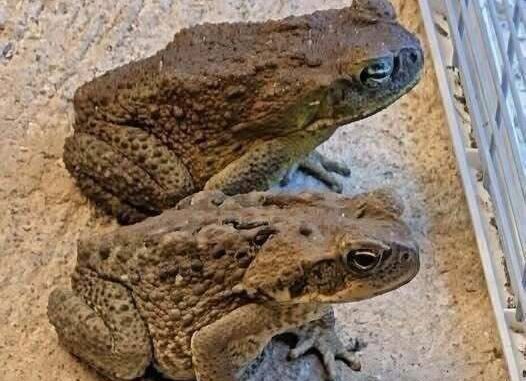
A toad appearing inside or near your living space is seldom a meaningless accident. While it may initially feel like an unexpected intrusion, the presence of such an animal is often closely tied to very practical ecological conditions as well as deeper symbolic interpretations that humans have attached to it over centuries. When you look at it carefully—without rushing to fear or dismissal—the moment becomes more than just a brief encounter with wildlife. It becomes a small intersection between human habitation and the wider natural world that continues to exist around and beyond our homes.
From a biological and environmental perspective, a toad is primarily driven by survival needs. It is not intentionally seeking out human attention or interaction. Instead, it is responding to cues in its surroundings that suggest favorable living conditions. Moisture is one of the most important factors. Toads have permeable skin that requires a damp environment to prevent dehydration, so they are naturally drawn to gardens, shaded areas, basements, doorways after rain, or any place where humidity lingers. These spaces often replicate the kind of microhabitats they would use in the wild, such as under rocks, leaf litter, logs, or near ponds and slow-moving water sources.
Another strong attraction is food availability. Toads are insectivores, meaning their diet consists mainly of insects and other small invertebrates. If a toad is appearing around your home, it is often because there is an active population of insects nearby. Outdoor lighting plays a significant role in this. Lights placed near entrances tend to attract moths, flies, mosquitoes, and various other flying insects during the evening hours. This, in turn, creates a convenient hunting ground for a nocturnal predator like a toad. In this sense, the toad is not randomly entering your space; it is following a natural chain of ecological interactions that leads it toward food.
Shelter is another essential factor. Human structures often provide excellent hiding places for small amphibians. Cracks in walls, shaded corners, garden pots, piles of wood, and even drainage areas can become temporary refuges. These spaces protect the toad from predators and harsh environmental conditions, especially during the day when it remains inactive. Because toads are generally nocturnal, they prefer to remain hidden and undisturbed until nighttime, when they become active hunters.
It is also important to understand what a toad’s presence suggests about the broader environmental quality of the area. Amphibians are often considered indicator species, meaning their presence or absence can reflect the health of an ecosystem. Toads, in particular, are sensitive to pollutants, chemicals, and significant ecological disruptions. If a toad is able to survive and thrive near a human dwelling, it often indicates that the surrounding environment has not been completely degraded. There is still enough biological activity—enough insects, enough moisture, enough natural balance—to support a complex food chain.
This does not mean the environment is untouched or pristine, but it can suggest that it retains a level of ecological functionality. In areas heavily saturated with pesticides or industrial pollutants, amphibian populations tend to decline sharply. Their skin absorbs substances directly from their environment, making them especially vulnerable to chemical exposure. Therefore, a toad’s appearance can sometimes serve as a subtle reminder that not all aspects of the surrounding environment are disconnected from nature. Even in human-dominated spaces, fragments of natural systems persist and interact with daily life in quiet ways.
From a behavioral standpoint, toads are generally non-aggressive and prefer avoidance over confrontation. When they enter a home or garden area, they are not acting defensively or invasively in the way that some animals might. Instead, they are exploring or passing through in response to environmental signals. Their movement is typically slow and deliberate, shaped by instinct rather than curiosity about human activity. This is why encounters often feel sudden or surprising: humans are not usually attuned to nocturnal ground-level wildlife movements.
When a toad is found inside a home, it is often the result of accidental entry rather than intentional habitation. Open doors, gaps under entrances, or poorly sealed windows can provide temporary access points. Once inside, the animal usually seeks the darkest and most humid corner available, which mimics its natural preference for cover. In such cases, the most appropriate response is gentle and non-harmful removal, guiding it back outdoors rather than attempting to harm or displace it aggressively. The goal is to restore it to a suitable habitat rather than disrupt its natural role in the ecosystem.
Beyond the biological explanation, toads have held symbolic meaning across many cultures throughout human history. These interpretations vary widely, but they often share common themes connected to transformation, adaptation, and hidden potential. Because toads live both on land and in water during different stages of their life cycle, they naturally became symbols of transition and duality. This amphibious nature places them between two worlds, which has often been interpreted as a metaphor for change, personal growth, or movement between different phases of life.
In some traditions, the toad is associated with prosperity and abundance. This symbolism is partly derived from its connection to fertile environments and its role in controlling insect populations, which helps maintain agricultural balance. A toad consuming pests around crops or gardens can indirectly support plant growth, reinforcing the idea of the toad as a beneficial presence rather than a harmful one. Over time, this practical ecological benefit evolved into symbolic associations with protection and good fortune.
Other interpretations view the toad as a creature connected to hidden wisdom or overlooked spaces. Because it often lives in shaded, damp, and quiet areas, it became associated with the unseen parts of life—those that are not immediately visible but still essential. In this sense, encountering a toad can be seen as a reminder to pay attention to subtle or neglected aspects of one’s environment or internal state. It invites reflection on what is often ignored or pushed into the background
There are also interpretations that connect toads with cleansing or renewal. Their presence in areas that feel stagnant or overgrown has sometimes been understood symbolically as a call to restore balance or attention. While this is not a scientific explanation, it reflects how humans tend to project meaning onto natural encounters. The toad becomes a quiet symbol of nature’s ongoing presence and its ability to reclaim space, even in environments shaped heavily by human activity.
When you bring together both the ecological and symbolic perspectives, the appearance of a toad near or inside a home becomes more layered. On one level, it is simply a small amphibian following food, moisture, and shelter. On another level, it becomes a reminder of the interconnected systems that exist beyond human perception. Even in urban or semi-urban environments, life continues to operate according to natural cycles, responding to weather patterns, insect populations, and seasonal changes.
There is also a practical lesson embedded in such encounters. The presence of a toad often signals that the immediate environment supports a healthy population of insects. While this might seem inconvenient from a human perspective, it is also a sign that local biodiversity is active. Instead of relying heavily on chemical control methods, the ecosystem is already providing a natural form of balance. The toad plays a role in regulating this balance by feeding on species that humans typically consider pests.
This dynamic highlights the importance of coexistence rather than separation. Human homes are not isolated from nature, even if they are built to provide shelter from it. Every structure exists within a broader ecological context, and animals like toads are part of that system. They move through gardens, yards, drainage systems, and occasionally indoor spaces as part of their normal survival patterns. Recognizing this can shift the experience from one of disturbance to one of understanding.
When a toad is discovered inside a home, the most appropriate response is usually calm and careful relocation. Handling should be minimal and gentle, avoiding harm to the animal’s sensitive skin. Using a soft container or guiding it toward an exit is often sufficient. Once outside, it will typically continue its natural behavior without lingering. There is no need for alarm or excessive intervention, as the animal is not interested in remaining in human spaces longer than necessary.
It is also worth considering how human habits contribute to such encounters. Outdoor lighting, for example, plays a major role in attracting insects, which in turn attract predators like toads. Reducing unnecessary nighttime lighting or using more targeted lighting options can sometimes reduce the number of insects near entry points. Similarly, maintaining dry, sealed entryways can limit accidental access. However, completely eliminating such encounters is neither realistic nor ecologically necessary, as they are part of the normal interaction between built and natural environments.
On a broader scale, the appearance of a toad can serve as a gentle reminder of environmental continuity. Nature does not stop at the boundaries of human property. It extends through soil, air, water, and living organisms that move freely across those boundaries. A toad crossing a threshold is not breaking an invisible rule; it is simply following patterns that have existed long before human structures were built.
In this way, the encounter can also encourage a shift in perception. Instead of viewing such animals as intruders, it becomes possible to see them as participants in a shared ecosystem. They contribute to insect control, serve as prey for larger animals, and help maintain balance within their habitats. Their survival is tied to environmental health, and their presence often reflects conditions that support more complex forms of life.
Ultimately, a toad appearing in or around your space is a small but meaningful reminder that the natural world is still active, responsive, and interconnected with human life. It arrives driven by practical needs—food, moisture, and shelter—but it also carries with it the quiet reality that ecosystems continue to function alongside our daily routines. Whether interpreted scientifically, ecologically, or symbolically, the encounter invites attention, awareness, and a momentary pause to recognize that even the smallest creatures are part of a much larger, ongoing system of life.
Leave a Reply