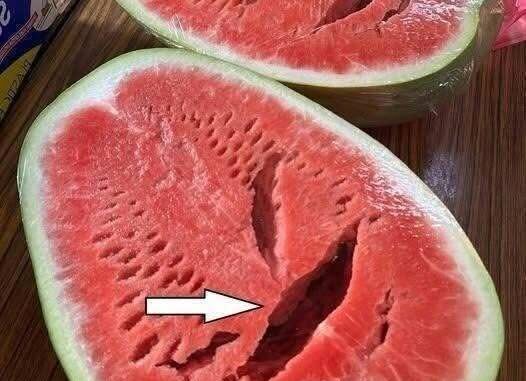
Watermelon is one of the most popular fruits enjoyed during warm weather. Known for its sweet taste, vibrant red flesh, and high water content, it is a refreshing addition to picnics, family gatherings, and healthy diets around the world. However, not every watermelon looks perfect on the inside. Sometimes, after slicing one open, you may discover cracks, hollow spaces, or unusual patterns in the flesh.
For many consumers, this can be surprising. A watermelon that appears normal on the outside may reveal internal splits that raise immediate questions. Is the fruit safe to eat? Has it gone bad? Was something wrong during cultivation? Could the cracks indicate the use of chemicals or artificial growth methods?
These questions have become increasingly common as photos and videos of cracked watermelons circulate online. Unfortunately, social media posts sometimes spread misinformation, leading people to believe that any unusual appearance inside a watermelon automatically signals a health risk. In reality, agricultural specialists and food scientists generally explain that internal cracks are often the result of natural growing conditions rather than contamination or spoilage.
Understanding why watermelons develop cracks can help consumers make informed decisions and reduce unnecessary food waste. In many cases, a watermelon with internal cracks remains fresh, flavorful, and safe to eat. The key is knowing how to evaluate the fruit properly.
This article explores the common causes of internal cracking in watermelons, explains the agricultural factors involved, discusses food safety considerations, and offers practical tips for choosing and storing watermelon.
Why Watermelons Sometimes Develop Cracks Inside
Watermelons contain a remarkably high amount of water, often exceeding 90 percent of the fruit’s total weight. This high water content contributes to the juicy texture and refreshing taste that people enjoy.
During the growing season, watermelons undergo rapid development. As they absorb water and nutrients from the soil, the fruit expands significantly in size. This growth process involves the continuous division and enlargement of cells throughout the watermelon.
Sometimes, however, growth does not occur perfectly evenly. Certain areas of the fruit may expand faster than others, creating internal stress within the flesh. When this happens, the tissue can separate slightly, resulting in cracks, cavities, or hollow spaces.
Agricultural experts often refer to these conditions using terms such as:
- Internal cracking
- Internal splitting
- Hollow heart
- Growth-related separation
While these terms describe slightly different appearances, they generally refer to natural structural changes that occur during the fruit’s development.
One of the most frequently observed causes of internal cracks is a condition known as hollow heart.
Despite its name, hollow heart does not mean the watermelon is empty. Instead, it describes gaps or openings that form within the center of the fruit as it grows. These spaces can range from tiny cracks to larger cavities depending on the severity of the condition.
Farmers and agricultural researchers have documented hollow heart for decades. It is a well-known phenomenon that affects watermelons in many growing regions around the world.
A watermelon with hollow heart may display:
- Small central cracks
- Star-shaped openings
- Irregular cavities
- Separated sections of flesh
- Uneven internal patterns
The appearance can vary significantly from one fruit to another. Some watermelons may contain only minor cracks that are barely noticeable, while others may develop larger spaces in the center.
Although the visual appearance may seem unusual, hollow heart is generally considered a quality issue rather than a food safety concern.
The Role of Rapid Growth
One of the primary reasons hollow heart develops is rapid growth.
Watermelons thrive under favorable environmental conditions. Warm temperatures, adequate sunlight, and sufficient moisture can accelerate fruit development. While rapid growth often results in larger fruit, it can sometimes create internal stress.
When the flesh expands too quickly, the internal tissues may not keep pace evenly throughout the fruit. As a result, certain areas can pull apart slightly, leading to the formation of cracks or cavities.
This process is similar to how rapid expansion in other biological structures can occasionally create internal tension. The watermelon continues to grow, but the internal flesh may not remain perfectly uniform.
Rapid growth is particularly common during periods of ideal weather following slower growth phases.
How Pollination Affects Watermelon Development
Pollination plays an essential role in the formation and development of watermelons.
Watermelon plants rely heavily on pollinators, especially bees, to transfer pollen between flowers. Successful pollination allows the fruit to develop properly and achieve its expected size and shape.
When pollination is incomplete or inconsistent, the resulting fruit may not grow uniformly. Uneven development can increase the likelihood of hollow heart and other internal structural irregularities.
Researchers have found that watermelons receiving inadequate pollination may be more susceptible to internal gaps because the seeds and surrounding tissues do not develop as consistently as they would under ideal pollination conditions.
For this reason, many commercial growers actively encourage pollinator activity throughout the growing season.
Weather Conditions and Their Impact
Weather has a major influence on watermelon growth.
Even when farmers carefully manage irrigation and crop care, environmental conditions can change rapidly. Sudden weather shifts may affect how the fruit develops internally.
Several weather-related factors have been associated with hollow heart and internal cracking:
Heavy Rainfall After Dry Periods
When a watermelon experiences a prolonged dry period followed by substantial rainfall, the fruit may absorb water rapidly. This sudden increase in moisture can contribute to uneven expansion within the flesh.
Extreme Heat
Extended periods of unusually high temperatures can accelerate growth and place stress on developing fruit tissues.
Temperature Fluctuations
Large swings between daytime and nighttime temperatures may influence how cells grow and expand.
Irregular Moisture Levels
Alternating periods of drought and abundant water can create inconsistent growth patterns, increasing the possibility of internal separation.
Because weather conditions are largely beyond human control, even experienced growers may occasionally encounter hollow heart in their crops.
Genetic Factors and Watermelon Varieties
Not all watermelon varieties behave the same way.
Some varieties are naturally more susceptible to hollow heart than others. Genetic differences can influence how the fruit responds to environmental stress, moisture levels, and growth rates.
Plant breeders continually work to develop watermelon varieties that offer improved consistency, better disease resistance, and reduced susceptibility to internal defects.
Even so, genetics remains one of several factors that can influence whether a particular watermelon develops cracks inside.
The presence of hollow heart does not necessarily indicate poor farming practices. In many cases, it reflects the interaction between genetics and environmental conditions.
Debunking Common Myths About Cracked Watermelons
Over the years, several myths have emerged regarding cracked watermelons. Unfortunately, some of these misconceptions continue to circulate online.
Myth: Internal Cracks Mean Chemicals Were Injected
One of the most widespread rumors claims that internal cracks result from chemical injections or artificial growth substances.
Agricultural experts generally reject this claim. Hollow heart has been documented for many decades, including periods before many modern agricultural technologies became common.
Scientific observations consistently link hollow heart to natural growth processes, pollination issues, environmental conditions, and genetic factors rather than evidence of chemical contamination.
Myth: Every Cracked Watermelon Is Unsafe
The presence of cracks alone does not automatically indicate a safety problem.
Many watermelons with hollow heart remain fresh and perfectly edible. Safety depends on the fruit’s overall condition rather than the existence of internal gaps.
Myth: Cracks Always Mean Spoilage
Spoilage involves microbial activity, decomposition, or deterioration of the fruit. Internal cracking is a structural condition that often develops while the watermelon is still growing in the field.
A fresh watermelon can contain cracks without showing any signs of spoilage.
Myth: Hollow Heart Means Poor Taste
Although texture may vary slightly, many consumers find that watermelons with hollow heart remain sweet, juicy, and enjoyable.
Taste depends primarily on factors such as sugar content, ripeness, variety, and growing conditions.
Is a Cracked Watermelon Safe to Eat?
In many situations, yes.
If a watermelon appears fresh and does not exhibit signs of spoilage, internal cracks alone generally do not make the fruit unsafe to consume.
Consumers should evaluate the watermelon using standard freshness indicators.
A watermelon is more likely to be suitable for consumption when it has:
- Bright, healthy-looking flesh
- A pleasant, mildly sweet aroma
- Firm texture
- Good moisture content
- No visible mold
- No unusual discoloration
When these characteristics are present, internal cracking is often simply a cosmetic issue rather than a food safety concern.
Signs That a Watermelon May Be Spoiled
Regardless of whether cracks are present, spoilage indicators should never be ignored.
Unpleasant Odor
Fresh watermelon typically has a mild, sweet scent. Sour, fermented, or unpleasant odors may indicate deterioration.
Slimy Surface
Healthy watermelon flesh should feel firm and juicy. A slimy or sticky texture may suggest microbial growth.
Mold Growth
Visible mold on either the rind or flesh is a strong indication that the fruit should be discarded.
Significant Discoloration
Dark spots, unusual colors, or extensive changes in appearance can indicate quality problems.
Off Flavor
If the watermelon tastes fermented, sour, or otherwise abnormal, it is best not to consume it.
Evaluating these factors provides a much more reliable assessment of freshness than relying on cracks alone.
Leave a Reply