Annabelle Thompson had spent most of her life in quiet devotion to others. At thirty-four, she lived in a modest apartment on the outskirts of Philadelphia, where the sound of piano music often drifted through open windows late into the evening. She taught children from working families, offering lessons at reduced prices whenever parents struggled to pay. To her students, she was patient and encouraging. To neighbors, she was polite but reserved. Yet beneath her calm nature was a lifetime of feeling overlooked by the very people who should have valued her most.
Her younger sister Megan was the complete opposite. Megan enjoyed being the center of attention wherever she went. She loved expensive clothes, lavish dinners, and posting carefully staged moments online for admiration from strangers and friends alike. Their parents rarely hid their preference for Megan’s outgoing personality. While Annabelle was expected to work hard and quietly carry responsibility, Megan was often rewarded simply for demanding more.
his imbalance had shaped their family dynamic for years. Annabelle handled practical matters, visited relatives, remembered birthdays, and took care of errands without being asked. Megan arrived late to family gatherings, often empty-handed, yet somehow still received praise for merely showing up. Annabelle tried not to resent her sister, but deep inside, the unfairness lingered like an unresolved chord
The one person who truly saw Annabelle’s heart was her grandmother, Eleanor Thompson.
Eleanor was a woman of dignity and discipline, known in her younger years as a gifted pianist and music instructor. She believed music revealed character. According to her, someone could hide selfishness in conversation but never through the way they approached a piano. “The instrument tells the truth,” she often said.
When Annabelle was eight years old, Eleanor began teaching her on the family’s treasured Steinway piano, a magnificent instrument built in 1892. The piano had belonged to Eleanor’s own mother before passing through generations of the Thompson family. Its polished wood carried faint marks from decades of use, and its ivory keys had slightly yellowed with age, but its sound remained rich and powerful. To outsiders, it was simply an antique instrument. To Eleanor, it represented family legacy, discipline, sacrifice, and love.
Every Sunday afternoon, Annabelle sat beside her grandmother practicing scales and classical pieces for hours. Eleanor never tolerated laziness, but she was endlessly patient with genuine effort. Those lessons became the foundation of Annabelle’s character. Through music, Eleanor taught honesty, humility, and perseverance.
“Talent means nothing without integrity,” Eleanor would remind her.
As the years passed, Annabelle became less like her parents and more like her grandmother. She valued sincerity over appearances. She found joy in meaningful work instead of public attention. Even during difficult periods of her life, music remained her refuge.
Then Eleanor’s health began to decline.
At eighty-seven, she was diagnosed with heart failure and eventually entered hospice care. The once-strong woman who had commanded recital halls now moved slowly and spoke softly, though her mind remained sharp. Annabelle visited almost every day after work, reading to her grandmother, helping organize medications, and sometimes playing piano recordings beside her bed.
Megan rarely visited unless other relatives were present.
One rainy afternoon, Eleanor asked Annabelle to sit beside her near the hospice window. Outside, water streaked down the glass as distant thunder rolled across the sky
“There’s something important we need to discuss,” Eleanor said gently.
Annabelle reached for her grandmother’s hand.
Eleanor explained that her attorney had finalized her estate documents. The Steinway piano, she said clearly, would belong to Annabelle after her passing. Her voice grew firmer despite her fragile condition.
“That piano is not to be sold,” she insisted. “It carries the soul of this family. Promise me you won’t let anyone turn it into money.”
Annabelle felt tears forming in her eyes.
“I promise.”
Eleanor smiled faintly. “Good. Some things are worth more than cash.”
A week later, Eleanor’s condition worsened, and hospice staff advised the family to prepare for the inevitable. Annabelle continued visiting daily, while her parents focused more on discussing practical matters like property and finances.
One afternoon, Annabelle drove to Eleanor’s empty house to collect photo albums and personal keepsakes before the property was eventually listed for sale. The old home felt painfully silent without her grandmother’s presence. Dust floated through narrow beams of sunlight, and the familiar scent of polished wood lingered in the air.
But the moment Annabelle entered the music room, her breath caught.
The Steinway was gone.
The empty space where the piano had stood looked unnatural, like a missing piece of the house itself. Scratches on the wooden floor showed where movers had rolled it away.
Her heart pounded.
She searched the house in disbelief before calling her mother immediately.
“Where is Grandma’s piano?” Annabelle demanded.
There was a pause on the line before her mother sighed impatiently.
“Oh, that,” she replied. “Your father handled it.”
“What do you mean he handled it?”
Her mother hesitated again, then answered casually, as if discussing ordinary furniture.
“We sold it.”
Annabelle froze.
“You what?”
“It was old, expensive to maintain, and honestly impractical,” her mother continued. “The buyer offered ninety-five thousand dollars. That’s more than enough to help the family.”
Annabelle’s voice trembled. “Grandma told me that piano belonged to me.”
“Well,” her mother replied sharply, “your grandmother is very sick and not thinking clearly. Besides, Megan needed reliable transportation.”
The truth hit like ice water.
“You used Grandma’s piano money to buy Megan a car?”
“It’s not just a car,” her mother corrected defensively. “It’s an investment in her future.”
Annabelle could barely process the words.
Her father eventually took the phone and spoke in an irritated tone. “Listen, it’s done. Don’t upset your grandmother with this nonsense. She doesn’t need stress right now.”
“That piano meant everything to her,” Annabelle whispered.
“It was an instrument,” he snapped. “Stop being dramatic.”
The call ended, leaving Annabelle standing alone in the empty music room.
For several minutes she simply stared at the vacant space where generations of family history had once stood. Anger mixed with grief until she felt physically sick. Yet stronger than either emotion was the memory of her promise to Eleanor.
The next morning, Annabelle returned to hospice care.
Eleanor noticed immediately that something was wrong.
“You look pale,” she said softly. “Tell me the truth.”
Annabelle hesitated. She didn’t want to burden her grandmother during her final days. But hiding the truth felt like betrayal.
So gently, carefully, she explained everything.
Eleanor listened without interruption. Her expression remained calm, though disappointment darkened her eyes. When Annabelle finished speaking, silence filled the room.
Finally, Eleanor asked for her phone.
She contacted her longtime attorney, Martin Keller, and requested an immediate meeting.
Annabelle expected anger or tears, but Eleanor remained composed.
“People reveal themselves when money appears,” she said quietly. “Now we know exactly who your parents chose to become.”
Over the next few days, tension spread through the family. Annabelle’s parents acted as though nothing unusual had happened. Megan proudly posted photos online beside her new silver Mercedes-Benz, thanking her parents for their “generosity.” Friends admired the luxury vehicle without knowing its true cost.
Meanwhile, Eleanor prepared carefully.
Three days later, the family gathered at Eleanor’s house for a birthday celebration honoring Annabelle’s father. Relatives filled the backyard, children played near the garden, and music drifted through outdoor speakers. Megan arrived dramatically in the Mercedes, parking it prominently near the front entrance so everyone could admire it.
Annabelle watched quietly from the porch.
Her father raised a glass during dinner and proudly gestured toward the car.
“Megan deserves something special,” he announced. “Life rewards ambition.”
Several relatives applauded politely.
Then the front gate opened.
Conversation stopped instantly.
Eleanor entered slowly beside her attorney, Martin Keller. Though visibly weak, she carried herself with undeniable authority. A hospice nurse remained nearby, but Eleanor waved away assistance as she approached the center of the gathering.
No one expected her to attend.
Her son rushed forward nervously. “Mom, you should be resting.”
“I’ll decide what I should be doing,” Eleanor replied calmly.
The yard fell silent.
Eleanor instructed everyone to sit.
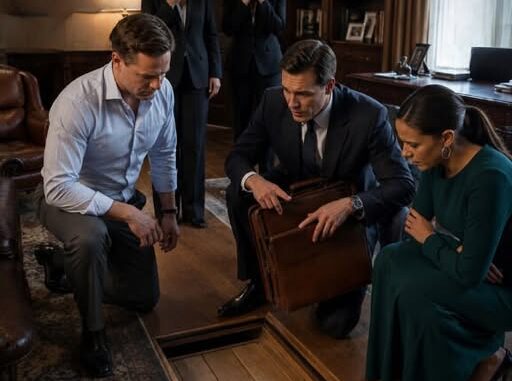
Martin Keller opened a leather briefcase and removed several documents. His voice was steady and professional as he addressed the family.
“These papers confirm that Eleanor Thompson legally transferred ownership of the 1892 Steinway piano to Annabelle Thompson prior to its unauthorized sale.”
Murmurs spread across the yard.
Martin continued. “The instrument could not legally be sold without Eleanor Thompson’s direct consent.”
Annabelle’s mother turned pale.
Her father interrupted angrily. “This is ridiculous. We were managing family property.”
Martin calmly produced financial records.
“The piano was sold for ninety-five thousand dollars,” he stated. “Bank transfers confirm those funds were then used to purchase the Mercedes-Benz currently titled to Megan Thompson.”
Every face turned toward the car.
Megan looked stunned. “Mom? Dad?”
Eleanor finally spoke.
“That piano represented generations of sacrifice,” she said quietly. “You stole from your own family for appearances and vanity.”
No one responded.
The silence felt crushing.
Annabelle’s father attempted to defend himself. “We were trying to help Megan.”
“With stolen money,” Eleanor replied.
Her daughter-in-law began crying softly, insisting they had only wanted fairness within the family. But Eleanor’s expression remained firm.
“Fairness?” she repeated. “You ignored the granddaughter who cared for me and rewarded selfishness instead.”
Megan stared at the ground, humiliated as relatives exchanged uncomfortable glances.
Martin Keller explained that legal action could follow if the funds were not immediately returned and the transaction reversed. Faced with undeniable evidence and public exposure, Annabelle’s parents finally agreed to comply.
The Mercedes was returned to the dealership within days.
The process was financially devastating. Fees, penalties, and legal expenses consumed much of the remaining money. Relationships within the family deteriorated rapidly. Relatives who had once ignored the favoritism could no longer pretend it did not exist.
For Annabelle, however, the greatest relief came when the Steinway was finally recovered.
The buyer, after learning the circumstances surrounding the sale, cooperated fully. Movers carefully transported the piano to the performing arts school where Annabelle taught music lessons. A small recital hall there became its permanent home.
When the instrument was placed beneath warm stage lights, Annabelle felt overwhelming emotion. Running her fingers across the familiar keys, she remembered childhood lessons with Eleanor, the discipline of endless practice, and the comfort music had always provided.
A week later, Eleanor visited the recital hall for the final time.
Though physically frail, she smiled the moment she saw the restored Steinway.
“It belongs here,” she whispered.
That evening, Annabelle performed for her grandmother alone in the quiet hall. She played Chopin, Debussy, and finally Eleanor’s favorite Beethoven sonata. The music echoed gently through the empty room as Eleanor listened with closed eyes.
When the final note faded, tears rested silently on Eleanor’s cheeks.
“That,” she said softly, “is what the piano was meant for.”
Eleanor passed away peacefully two days later.
Her funeral drew former students, neighbors, musicians, and friends whose lives she had influenced over decades. Many spoke about her integrity and strength. Others remembered her demanding but compassionate teaching style. Again and again, people described her as a woman who valued truth over comfort.
Annabelle inherited more than the piano after Eleanor’s passing. She inherited responsibility for preserving the values her grandmother had spent a lifetime teaching.
The following years were not easy.
Her relationship with her parents remained strained. Though they apologized repeatedly, trust never fully recovered. Megan struggled deeply with the public embarrassment of the incident. For the first time in her life, she confronted the consequences of entitlement.
Surprisingly, Megan eventually changed.
Months after Eleanor’s death, she visited Annabelle’s recital hall quietly, without makeup or expensive clothes, and listened during a student performance. Afterward, she admitted she had spent years chasing approval because she feared feeling insignificant.
“I thought attention meant love,” Megan confessed.
Annabelle didn’t immediately forgive her, but she understood the pain behind those words.
Healing came slowly.
Over time, Megan began volunteering at local arts programs, helping children from low-income families access music education. She sold many luxury items she no longer wanted and started building a life less dependent on appearances. While the sisters never became inseparable, their relationship gradually grew more honest.
As for Annabelle, she continued teaching piano with renewed purpose.
Students were often fascinated by the historic Steinway in the recital hall. Some asked why she never sold such a valuable instrument.
Annabelle always smiled before answering.
“Because not everything valuable should be turned into money.”
Years later, after evening lessons ended and the building grew quiet, Annabelle often sat alone at the piano reflecting on everything that had happened. She would rest her hands on the worn ivory keys and remember her grandmother’s voice.
Music, Eleanor believed, was never about status or applause. It existed to express truth—the kind that could not be hidden behind wealth, pride, or performance.
And in the end, truth had prevailed.
The piano remained exactly where it belonged, not as a trophy of wealth but as a living reminder of integrity, sacrifice, and love passed through generations.
Whenever Annabelle played, she felt Eleanor’s presence in every note.
The story of the Steinway eventually became known throughout the local music community in Philadelphia. Some people heard it as a cautionary tale about greed. Others saw it as proof that family legacies carry emotional value far beyond financial worth. But for Annabelle, the lesson was deeply personal.
She learned that silence can protect wrongdoing just as easily as truth can expose it.
For years she had accepted being overlooked because confrontation felt uncomfortable. She avoided conflict, tolerated unfairness, and convinced herself that keeping peace mattered more than defending herself. Yet when faced with losing the one thing her grandmother entrusted to her, she discovered a different kind of strength.
Not loudness.
Not revenge.
But courage rooted in honesty.
That courage changed the course of her life.
One winter evening nearly a decade after Eleanor’s passing, Annabelle hosted a student recital featuring children from disadvantaged neighborhoods. Parents crowded into the small hall while nervous students waited backstage clutching sheet music.
At the center of the stage sat the restored 1892 Steinway.
Before the performance began, Annabelle addressed the audience.
“This piano survived because someone believed some things are sacred,” she said. “Music should never exist for pride or profit alone. It should connect people to something genuine.”
Then she invited her youngest student, a shy nine-year-old girl named Clara, to perform first.
Clara approached the piano nervously, but once her fingers touched the keys, confidence emerged through the melody. The audience listened in complete silence.
As Annabelle watched from backstage, emotion filled her chest.
This was the future Eleanor had hoped for.
Not wealth.
Not admiration.
But the continuation of beauty, honesty, and human connection through music.
After the recital ended and families slowly departed, Annabelle remained alone in the dimly lit hall. Snow drifted softly outside the windows while silence settled around the room.
She sat at the Steinway and began playing the same Beethoven sonata Eleanor loved most.
The notes rose gently into the quiet night, carrying memories of childhood lessons, heartbreak, forgiveness, and resilience.
For a moment, it almost felt as though her grandmother were sitting nearby listening once more.
And perhaps, in some way, she was.
Leave a Reply