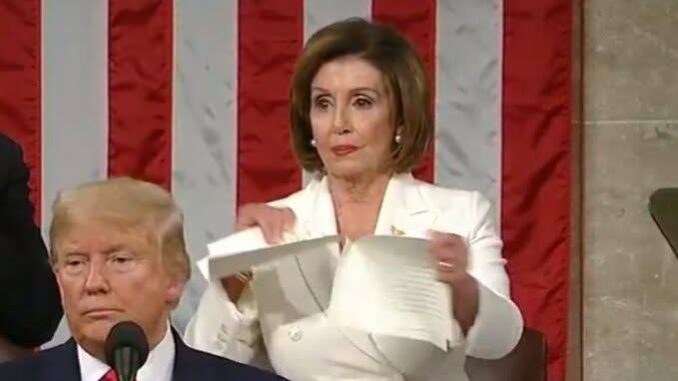
As another contentious election cycle unfolds in the United States, debates surrounding former President Donald Trump continue to shape the nation’s political landscape. Among the latest controversies is a renewed effort by some of Trump’s allies to remove, or “expunge,” the record of his two impeachments from congressional history. While such a move would carry little practical legal effect, it has generated significant discussion because of what it symbolizes: an attempt to redefine how one of the most controversial presidencies in modern American history will be remembered.
The proposal has sparked intense reactions across the political spectrum. Supporters view it as a corrective measure that would address what they consider unfair or politically motivated actions taken against Trump during his time in office. Critics, on the other hand, argue that any effort to erase or alter official records threatens the integrity of historical documentation and undermines the constitutional processes that have long governed American democracy.
At its core, the debate is not simply about impeachment records. It is about competing visions of history, accountability, and political legitimacy. The controversy highlights how deeply divided the country remains over Trump’s presidency and the lasting impact it has had on American institutions.
Understanding the Historical Context
Donald Trump became the first president in U.S. history to be impeached twice by the House of Representatives. The first impeachment occurred in 2019, centering on allegations that he pressured Ukraine to investigate a political rival while withholding military aid. The second impeachment followed the events of January 6, 2021, when supporters of Trump stormed the U.S. Capitol during the certification of the presidential election results.
In both cases, the House voted to impeach, but the Senate did not reach the threshold required to convict and remove him from office. Nevertheless, the impeachments became permanent parts of the historical record and established a precedent unlike any experienced by previous presidents.
For supporters of the former president, the acquittals demonstrate that the impeachment efforts lacked sufficient justification. They argue that because Trump was not convicted, the impeachments should not continue to define public perceptions of his presidency. Opponents counter that impeachment itself is a constitutional action taken by the House and remains historically significant regardless of the outcome in the Senate.
The Meaning Behind Expungement Efforts
The idea of expunging an impeachment is largely symbolic. Legal experts generally note that impeachment proceedings are historical events that occurred and cannot simply be erased through a later vote. Congressional records document actions taken by elected representatives at specific moments in time, making them part of the nation’s institutional history.
Even so, symbolism can be powerful in politics. Advocates of expungement believe it would send a strong message that the impeachment efforts were misguided and politically motivated. For many within Trump’s political movement, removing the stain of impeachment is seen as an act of vindication and a way to reinforce claims that he was unfairly targeted by political opponents.
The effort also reflects the broader political strategy of controlling narratives. In modern politics, public perception often carries as much weight as legal outcomes. A successful vote, even one with no practical constitutional effect, could be presented as evidence that Congress acknowledges past mistakes.
Critics view the proposal differently. They argue that historical records should reflect events as they happened, regardless of changing political circumstances. In their view, attempts to erase official actions create a dangerous precedent in which future political majorities could seek to rewrite uncomfortable chapters of history rather than confront them openly.
Constitutional Questions and Legal Perspectives
The debate has prompted constitutional scholars to examine whether Congress has the authority to remove impeachment records after the fact. Many experts contend that impeachment is a completed constitutional process. Once the House adopts articles of impeachment, that action becomes part of the permanent historical record.
Unlike criminal convictions, which may sometimes be expunged under specific legal procedures, congressional actions operate under different principles. Votes, debates, and legislative decisions are documented to preserve transparency and accountability. As a result, many scholars argue that expungement resolutions cannot truly undo impeachment.
Instead, such resolutions are often viewed as expressions of opinion by a later Congress. They may state disagreement with previous actions, but they do not alter the reality that those actions occurred.
This distinction lies at the heart of the controversy. While supporters may celebrate an expungement vote as a form of political justice, critics emphasize that constitutional history cannot be rewritten through symbolic resolutions.
The Struggle Over Historical Memory
Political battles are often fought not only over policy but also over memory. Leaders, parties, and movements seek to shape how future generations will understand important events. The effort to expunge Trump’s impeachments fits within this broader struggle.
History is more than a collection of facts. It is also a story that societies tell about themselves. Different groups may interpret the same events in dramatically different ways. For some Americans, Trump’s impeachments represent necessary checks on presidential power. For others, they symbolize partisan overreach and political hostility.
The disagreement reflects larger questions about accountability, governance, and the limits of executive authority. It also demonstrates how historical interpretation can become a political battlefield.
Supporters of expungement argue that future generations should not view Trump primarily through the lens of impeachment. They believe his achievements, policy decisions, and electoral influence deserve greater attention than the controversies that surrounded his administration.
Opponents maintain that impeachment was a significant constitutional event and should remain part of any honest assessment of his presidency. Removing or minimizing that aspect, they argue, risks presenting an incomplete picture of history.
Political Implications During an Election Season
The timing of the debate is particularly significant. Election years often amplify political conflicts because every issue becomes intertwined with campaign messaging and voter mobilization.
For Trump’s allies, calls to expunge the impeachments may energize supporters who believe he faced unfair treatment from political institutions. The proposal can reinforce narratives of political persecution and strengthen loyalty among core voters.
Meanwhile, opponents may use the effort as evidence that political loyalty is being placed above institutional norms. They argue that attempts to erase impeachment records demonstrate an unwillingness to acknowledge controversial aspects of Trump’s presidency.
As a result, the issue becomes more than a historical debate. It evolves into a campaign issue that influences how candidates communicate with voters and frame their positions on governance and accountability.
Political strategists understand that symbolism matters. Even if the practical consequences of expungement are limited, the discussion itself can shape public perceptions and dominate news coverage during a crucial period.
Public Opinion and National Division
The controversy also reflects the deep polarization that continues to characterize American politics. Public opinion regarding Trump remains sharply divided, with strong feelings on both sides.
Many supporters see efforts to revisit the impeachments as part of a broader movement to challenge what they perceive as institutional bias. They view the issue through a lens of fairness and believe Trump deserves formal recognition that the impeachment proceedings were unjust.
Critics take the opposite view, arguing that accountability mechanisms are essential for preserving democratic norms. From their perspective, maintaining accurate historical records is a matter of principle rather than politics.
These competing viewpoints illustrate how difficult it has become to achieve consensus on major national issues. Even events that have already occurred remain subjects of intense debate years later.
The disagreement is not merely about facts but about values, priorities, and interpretations. Each side approaches the issue with fundamentally different assumptions about what the impeachments represent and what lessons should be drawn from them.
Why the Debate Matters
Regardless of whether any expungement effort succeeds, the discussion itself carries significant implications. It forces Americans to revisit some of the most consequential moments of recent political history and reconsider what those events mean.
The debate raises important questions about the relationship between politics and historical memory. Can future legislatures redefine the meaning of past events? Should official records remain untouched regardless of changing political circumstances? How should democratic societies balance differing interpretations of controversial periods?
These questions extend beyond any single president. They touch on broader principles that influence how democratic institutions preserve history and maintain public trust.
The controversy also serves as a reminder that political legacies are rarely settled immediately. Historical reputations evolve over time as new information emerges and societal perspectives shift. Leaders who were once celebrated may later face criticism, while figures who were initially controversial may be reassessed in a different light.
Trump’s presidency remains a subject of ongoing evaluation, and debates surrounding his legacy are likely to continue for years to come.
Looking Ahead
Whether Congress ultimately advances or rejects efforts to expunge Trump’s impeachments, the issue underscores the enduring influence he continues to exert over American politics. Few modern political figures have inspired such intense loyalty and opposition simultaneously.
The debate demonstrates that the struggle over Trump’s legacy is far from over. Supporters seek recognition and validation, while critics emphasize accountability and historical accuracy. Both sides understand that public memory can influence future political developments.
Even if no formal action changes the historical record, the conversation itself ensures that the impeachments remain central to discussions about Trump’s presidency. In that sense, the controversy may achieve the opposite of what some advocates intend: rather than closing the chapter, it reopens national debates about the scandals, investigations, constitutional conflicts, and political turmoil that defined a significant period in American history.
As the country moves through another election season, these questions will likely remain at the forefront of public discourse. The outcome of the debate may not alter the past, but it will continue to shape how Americans interpret it. Ultimately, the controversy illustrates a broader truth about politics: battles over history are often as fierce as battles over the future.
Leave a Reply